Monday, May 12, 2014

How It All Began


When Charlotte is mugged and breaks her hip, her daughter Rose cannot accompany her employer Lord Peters to Manchester, which means his niece Marion has to go instead, which means she sends a text to her lover which is intercepted by his wife, which is just the beginning in the ensuing chain of life-altering events.

In this engaging, utterly absorbing and brilliantly told novel, Penelope Lively shows us how one random event can cause marriages to fracture and heal themselves, opportunities to appear and disappear, lovers who might never have met to find each other and entire lives to become irrevocably changed.

We’ll be talking about this book on Wednesday, May 21, at 6:30 pm. Books are available to borrow at the library.


Interesting links:

NYT review

another NYT review

A Lively Ode to Happenstance: an NPR story with Penelope Lively

 Discussion Questions from LitLovers


Monday, March 10, 2014

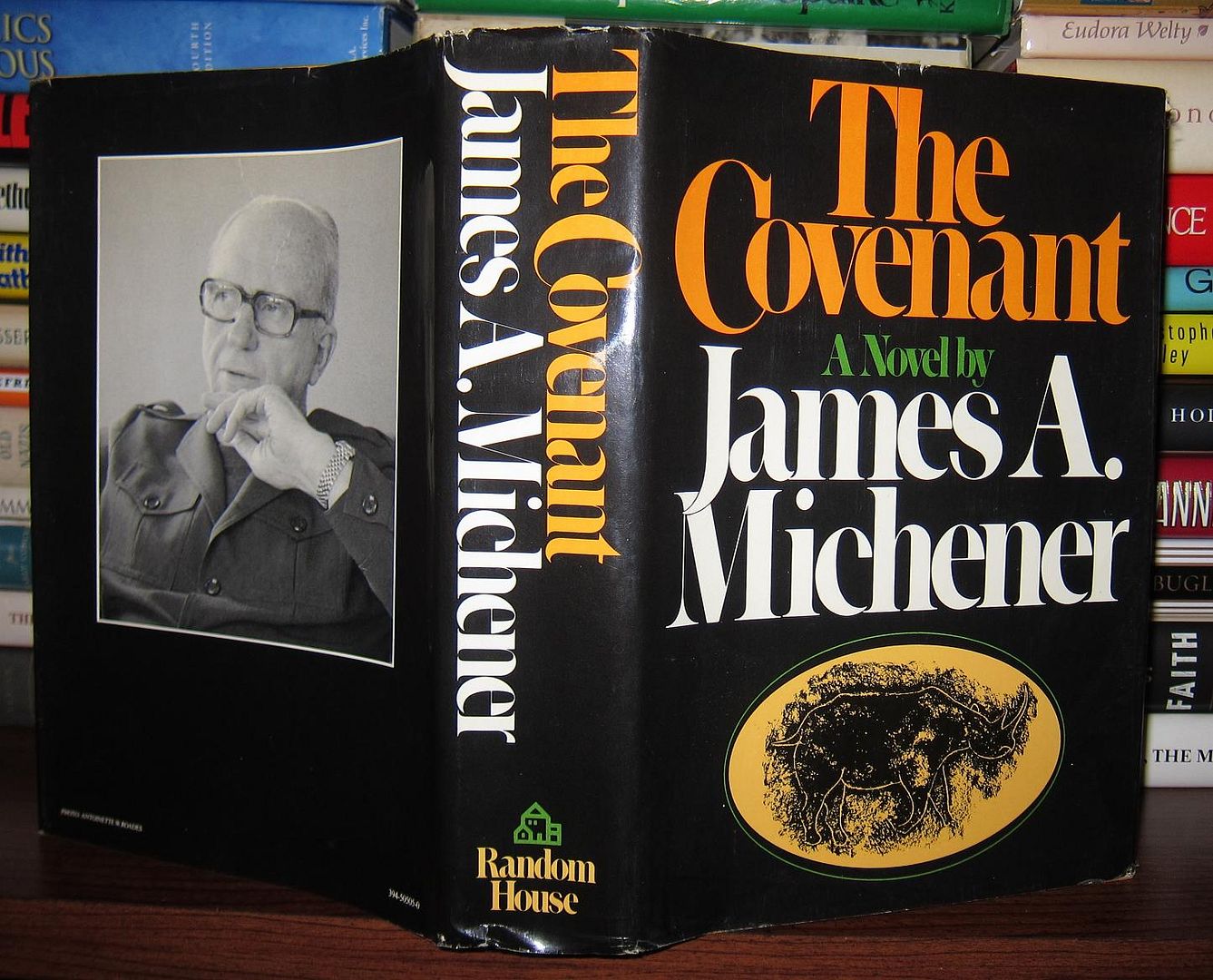
The Covenant


The Covenant by James A. Michener is an epic tale that whisks the reader from the earliest days in South Africa and the San tribal customs and follows its growth and development through several key families right up to and including apartheid. It is a history lesson that is personalized so as to ingrain itself on you as you grow with each generation of the families involved. The Covenant is a remarkable piece of work, endeavoring to show all sides of an impossible situation and giving the reader an insight to issues that most of its own countrymen still struggle to understand.


It is a well told story that leaves the reader with lots to think about.

We'll be talking about The Covenant on Wednesday, March 19, at 6:30 pm.
Books are available to borrow from the library.

Friday, February 7, 2014

Long Walk to Freedom

Nelson Mandela is one of the great moral and political leaders of our time: an international hero whose lifelong dedication to the fight against racial oppression in South Africa won him the Nobel Peace Prize and the presidency of his country. Since his triumphant release in 1990 from more than a quarter-century of imprisonment, Mandela has been at the center of the most compelling and inspiring political drama in the world. As president of the African National Congress and head of South Africa's antiapartheid movement, he was instrumental in moving the nation toward multiracial government and majority rule. He is revered everywhere as a vital force in the fight for human rights and racial equality.

His autobiography Long Walk to Freedom was published in 1995. The book profiles his early life, coming of age, education and 27 years in prison. Under the apartheid government, Mandela was regarded as a terrorist and jailed on the infamous Robben Island for his role as a leader of the then-outlawed ANC. He has since achieved international recognition for his leadership as president in rebuilding the country's once segregated society.[1] The last chapters of the book describe his political ascension, and his belief that the struggle continues against apartheid in South Africa.

We'll be talking about Long Walk to Freedom on February 19 at 6:30 pm. Books are available to borrow from the library.


Interesting Links

The Trial of Nelson Mandela (Rivonia Trial): Testimony of Alan Paton

Mandela quotes

Images of Nelson Mandela 

The Xhosa people

Thursday, December 26, 2013

Don't Let's Go to the Dogs Tonight: An African Childhood


When the ship veered into the Cape of Good Hope, Mum caught the spicy, heady scent of Africa on the changing wind. She smelled the people: raw onions and salt, the smell of people who are not afraid to eat meat, and who smoke fish over open fires on the beach and who pound maize into meal and who work out-of-doors. She held me up to face the earthy air, so that the fingers of warmth pushed back my black curls of hair, and her pale green eyes went clear-glassy.

“Smell that,” she whispered, “that’s home.”

Vanessa was running up and down the deck, unaccountably wild for a child usually so placid. Intoxicated already.

I took in a faceful of African air and fell instantly into a fever.

In Don’t Let’s Go to the Dogs Tonight, Alexandra Fuller remembers her African childhood with visceral authenticity. Though it is a diary of an unruly life in an often inhospitable place, it is suffused with Fuller’s endearing ability to find laughter, even when there is little to celebrate. Fuller’s debut is unsentimental and unflinching but always captivating. In wry and sometimes hilarious prose, she stares down disaster and looks back with rage and love at the life of an extraordinary family in an extraordinary time.

Books are available for you to borrow from the Gulford Free Library. We'll talk about this book on Wednesday, January 15.

New York Times review 12/21/2001

Alexandra Fuller's website

LitLover's Study Guide Discussion Questions

Map of Zambia, Rhodesia and Malawi

Saturday, November 23, 2013

Rising from the Rails-Pullman Porters and the Black Middle Class - December Book


Books are available for you to borrow at the Guilford Free Library. We'll talk about this book on Wednesday, December 18th.


When George Pullman began recruiting Southern blacks as porters in his luxurious new sleeping cars, the former slaves suffering under Jim Crow laws found his offer of a steady job and worldly experience irresistable. They quickly signed up to serve as maid, waiter, concierge, nanny, and occasionally doctor and undertaker to cars full of white passengers, making the Pullman Company the largest employer of African Americans in the country by the 1920s.

Drawing on extensive interviews with dozens of porters and their descendants, Larry Tye reconstructs the complicated world of the Pullman porter and the vital cultural, political, and economic roles they played as forerunners of the modern black middle class. Rising from the Rails provides a lively and enlightening look at this important social phenomenon.

About the author, Larry Tye.

The Legacy of Pullman Porters, from the Museum of the American Railroad.

Terry Gross interviews Larry Tye on Fresh Air in 2004.

Tuesday, September 24, 2013

Telegraph Avenue by Michael Chabon - October and November book

Books are available for you to borrow at the Guilford Free Library. We'll talk about this book on Wednesday, November 20 at 6:30 PM.

“Telegraph Avenue,” Michael Chabon’s rich, comic new novel, is a homage to an actual place: the boulevard in Northern California where Oakland — historically an African-American city — aligns with Berkeley, whose bourgeois white inhabitants are, as one character puts it, “liable to invest all their hope of heaven in the taste of an egg laid in the backyard by a heritage-breed chicken.”
 As the summer of 2004 draws to a close, Archy Stallings and Nat Jaffe are still hanging in there—longtime friends, bandmates, and co-regents of Brokeland Records, a kingdom of used vinyl located in the borderlands of Berkeley and Oakland. Their wives, Gwen Shanks and Aviva Roth-Jaffe, are the Berkeley Birth Partners, a pair of semi-legendary midwives who have welcomed more than a thousand newly minted citizens into the dented utopia at whose heart—half tavern, half temple—stands Brokeland.

When ex–NFL quarterback Gibson Goode, the fifth-richest black man in America, announces plans to build his latest Dogpile megastore on a nearby stretch of Telegraph Avenue, Nat and Archy fear it means certain doom for their vulnerable little enterprise. Meanwhile, Aviva and Gwen also find themselves caught up in a battle for their professional existence, one that tests the limits of their friendship.

Michael Chabon's web page
interview with Michael Chabon , the Guardian
interview with Michael Chabon, KQED Radio

Thursday, August 29, 2013

Mad Max: Unintended Consequences- September Book

For our late summer, light reading, we've chosen Mad Max: Unintended Consequences. Books are available for you to borrow at the Guilford Free Library. We'll talk about this book on Wednesday, September 18 at 6:30 PM.

Mad Max Davies lives a privileged life in Manhattan when her only daughter is seriously injured in an auto accident. She rushes to Richmond, Virginia, to care for her daughter and her two grandchildren. Twelve-year-old Emilie uses her gift of feeling what others are feeling, and acts as an early warning system when her mother’s behavior deteriorates. When her daughter is murdered, Mad Max
and her grandchildren set out to solve the crime. As a result, she promises she will help raise her grandchildren even though it means completely changing her lifestyle.

Here's a link to Betsy Ashton's web page, if you'd like to read more about her.

Here are a few discussion topics to help us focus on the main themes of this book.

  1. When Mad Max learns her daughter has been injured in a bad accident, she rushes back to Richmond from New York to take care of her. Since these are estranged, do you think Max does everything she can to reconcile with Merry? Many mothers and daughters grow apart, making it harder to reconcile as years pass. Readers might want to share how they reconciled with their parents and children.
  2. Merry suffers from PTSD after her accident. Do you know anyone who suffers from this disorder? Did their behavior change? PTSD is not limited to people who have witnessed tragedy in war. Anyone can suffer stress, which can lead to physical and emotional trauma. Readers with experience with a friend or relative with PTSD should be asked to share their personal experiences, particularly as they apply to the relationship between Max and Merry.
  3. Max is conflicted about having to give up her life in Manhattan to return to child rearing. Do you know anyone who is raising grandchildren after they thought they were “done?”Even if grandparents are not actively raising grandchildren, many of them think about what they would do in Max’s situation.
  4. Eleanor and Raney give Max a “doo-wop.” Do you think Max got her “doo-wop” right? Most of us wish we had a second chance to get something right. Readers might want to engage in their own experiences when they worked to resolve issues with friends and family.